

Black Seed Oil: What 3,000 Years of Use and Modern Science Agree On
Abdullaah KhanShare
Black Seed Oil: What 3,000 Years of Use and Modern Science Agree On
There's a saying attributed to the Prophet Muhammad (peace be upon him) that black seed is a cure for everything except death. For over a billion Muslims worldwide, that phrase alone has made Nigella sativa a household staple for centuries. But you don't need to come to it from a faith tradition to find it remarkable. The plant has been documented in ancient Egyptian texts, referenced by Hippocrates, and written about by Ibn Sina (Avicenna) in his Canon of Medicineover a thousand years ago.
What's interesting is that modern science is now catching up with what traditional medicine has long claimed. And whilst the research is still maturing, what exists is, in some areas at least, genuinely compelling.
So here's an honest account of what black seed oil actually does, where the strongest evidence sits, where the science is still thin, and why quality matters more than almost anything else when choosing a product.
What Is Black Seed Oil?
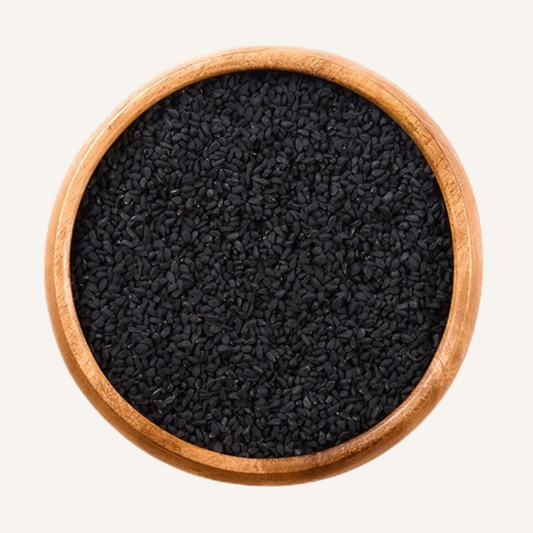
Nigella sativa is a small flowering plant native to Southwest Asia and the Mediterranean. Its tiny black seeds, also known as black cumin, kalonji, or habbatus sauda, have been pressed into oil and used medicinally for millennia across Middle Eastern, South Asian, and North African cultures.
The oil's primary bioactive compound is thymoquinone (TQ), a naturally occurring molecule that accounts for most of the pharmacological activity attributed to black seed. A comprehensive 2025 review covering all clinical trials of thymoquinone to date confirmed it demonstrates antioxidant, anti-inflammatory, immune-stimulating, antiviral, and antibacterial effects across both experimental and clinical settings.1 That is an unusually broad profile for any single natural compound, and honestly, it still surprises us every time we read it.
There are also fatty acids, alkaloids, flavonoids, and a variety of minerals in the mix. Each plays a role, but thymoquinone is really where most of the research interest sits.
One thing worth knowing upfront: not all black seed oils are equal. A study in the journal Nutrients tested commercial black seed oils and found a 27-fold difference in thymoquinone content between the best and worst products on the same shelf.2 Same label claims. Completely different oil inside the bottle. We'll come back to this, because it matters a lot.
What the Research Actually Shows
This is where it gets genuinely interesting, and where we want to be careful to separate strong evidence from promising-but-preliminary findings. No hype, no hand-waving. Just what the studies actually say.
Cardiovascular and Metabolic Health
This is the area with arguably the most robust human evidence, and the numbers are hard to ignore.
A major 2025 meta-analysis assessed 82 randomised controlled trials involving over 5,000 participants and found that Nigella sativa supplementation significantly improved a wide range of cardiometabolic markers, including blood pressure, LDL cholesterol, total cholesterol, fasting blood sugar, HbA1c, and inflammatory markers such as CRP and IL-6.3 That's a serious body of evidence by any standard.
A separate 2025 meta-analysis of 16 RCTs specifically in type 2 diabetic patients found that black seed supplementation significantly reduced fasting blood glucose, HbA1c, total cholesterol, and LDL, with the oil form tending to outperform powder.4 The researchers noted that doses above 1g per day and durations beyond 8 weeks produced the strongest results.
On blood pressure specifically, an earlier meta-analysis confirmed that Nigella sativa oil was more effective than powder form at reducing both systolic and diastolic readings.5
These are not fringe findings from one small study. This is peer-reviewed, randomised, controlled research conducted on thousands of real people, and the direction of evidence is consistent.
Inflammation and Immunity
Thymoquinone's anti-inflammatory properties are among the most studied aspects of black seed oil. It appears to work by modulating key inflammatory pathways, suppressing pro-inflammatory compounds like TNF-α and IL-6 whilst supporting immune function rather than simply flattening it.
This "immunomodulatory" quality, the ability to regulate the immune system rather than just crank it up or down, is what makes black seed oil particularly interesting from a health perspective. A 2022 overview of systematic reviews found evidence of beneficial effects on asthma, allergic rhinitis, and inflammatory conditions alongside the metabolic benefits above.6
And yes, research is ongoing into its role in respiratory health. Avicenna wrote about black seed easing breathlessness over 1,000 years ago. It turns out he was onto something.
Where the Evidence Is Thinner
Honesty matters here, so we'll say it plainly. Much of the most exciting research on thymoquinone, including cancer-related findings, comes from laboratory and animal studies. The leap from "this compound inhibited cancer cell growth in a test tube" to "this oil treats cancer in humans" is enormous, and that leap has not been made in clinical terms.
Similarly, whilst there is genuine promise around cognitive health and neuroprotection, the human evidence here is still early-stage.
This doesn't diminish what the research does show. It just means we describe things accurately, because that's how trust works.
The Prophetic Medicine Angle, And Why It Matters Beyond Faith
For many in the Muslim community, black seed oil needs no scientific justification. Its use is rooted in a hadith (prophetic tradition) that has shaped dietary and health practices across the Islamic world for over 1,400 years. This isn't superstition. It's one of the oldest documented examples of traditional nutritional medicine, passed down across generations with remarkable consistency.
What's striking is that the areas where traditional use has been strongest, namely immunity, digestion, respiratory health, and metabolic balance, are precisely the areas where modern research has found the most evidence. Traditional wisdom doesn't always survive scientific scrutiny. In this case, it largely has, and we find that genuinely moving.
At Sweet Health, this intersection of ancestral tradition and modern evidence is at the heart of everything we do. It's actually the reason this business exists. Our Egyptian Black Seed Oil is cold-pressed specifically to preserve thymoquinone integrity, because that compound, more than anything else, is what makes the oil worth taking.
The Quality Problem Nobody Talks About
This is the part that frustrates us most, because it affects real people making genuine health decisions.
That 27-fold difference in thymoquinone content between products on the same shelf is not a minor variation. It means a low-quality black seed oil could contain almost none of the compound responsible for the benefits you're taking it for. You'd essentially be paying for strongly flavoured vegetable oil with a health claim on the label. Not ideal, to say the least.
Several factors affect thymoquinone content and stability. Heat is the biggest enemy: thymoquinone degrades significantly when extracted using heat or chemical solvents, which is why cold-pressing matters so much. Light exposure also causes oxidation, which is why amber glass bottling is preferable to clear plastic. And freshness counts: thymoquinone content declines over time, particularly in poorly stored oil.
When choosing black seed oil, here's what to actually look for:
Cold-pressed extraction, the only method that meaningfully preserves thymoquinone. Dark glass bottling to protect against light-induced oxidation. Clear origin sourcing, as Egyptian and Turkish black seed varieties have the strongest traditional and commercial track records. Transparent lab testing, ideally with published thymoquinone content rather than just a generic "cold pressed" claim on the front.
It's not glamorous stuff, but it's the difference between a product that actually works and one that just looks the part.
How to Use Black Seed Oil: Practical Guidance
The research and traditional use together point to a fairly consistent picture on dosing, which is convenient because it means less guesswork for you.
Dose: Most clinical trials have used between 1 and 3 grams daily, roughly half to one teaspoon of oil. The 2025 meta-analysis found doses above 1g daily produced stronger results in key metabolic markers. More is not always better, and higher doses may cause digestive discomfort in some people.
How to take it: Directly off the spoon is the traditional method, though the taste is, let's be honest, an acquired one. Peppery, slightly bitter, and assertive enough to let you know it's there. Mixing into warm water, honey, or a smoothie works equally well and is far more pleasant for most people. It can also be used as a culinary oil, though cooking at high heat will degrade the thymoquinone, so it's best added cold or stirred in after cooking.
Duration: As with most natural interventions, consistency over time matters more than short bursts. Aim for at least four to eight weeks before drawing conclusions.
Who should exercise caution: Black seed oil may lower blood sugar and blood pressure, so if you're on medication for either condition, please speak with your GP before starting. It's also worth checking with a healthcare professional during pregnancy. Those on blood-thinning medication should be aware it may have mild anticoagulant properties.
The Bottom Line
Black seed oil is one of the few natural health products where traditional use and modern science are genuinely pulling in the same direction. The evidence for cardiovascular, metabolic, and anti-inflammatory benefits from human clinical trials is meaningful and growing. A meta-analysis of 82 randomised controlled trials is not a small dataset; that's a real, substantial body of evidence.
Does it cure everything? Of course not. No single food, oil, or supplement does, and anyone telling you otherwise is selling something far more dubious than black seed oil. But as part of a considered approach to natural health, the case for it is quietly, solidly, one of the more compelling ones out there.
Three thousand years of consistent use across vastly different cultures usually means something. It turns out that in this case, it means quite a lot.
References
This article is for informational purposes only and does not constitute medical advice. If you have an existing health condition or take prescribed medication, please consult your GP before introducing any new supplement.
-
Babatola, L.J., et al. (2025). Thymoquinone and therapeutic potentials: Updated evidences from clinical trials. Pharmacological Research, Natural Products, 8, Article 100283. ↩
-
Gilani, S.A., et al. (2022). Screening of thymoquinone content in commercial Nigella sativa products. Nutrients, PMC9460610. ↩
-
Karimi, M., et al. (2025). Does Nigella sativa supplementation improve cardiovascular disease risk factors? A GRADE-assessed meta-analysis of 82 RCTs. ScienceDirect. ↩
-
Karimi, M., et al. (2025). Effects of black seed on cardiometabolic indices in type 2 diabetic patients: A systematic review and meta-analysis. Complementary Therapies in Medicine, 90, 103174. ↩
-
Fakhri, M., et al. (2024). Determination of the effect of Nigella sativa on blood pressure: A systematic review and meta-analysis. Journal of Nephropathology, 13(1), e21474. ↩
-
Wang, Y., et al. (2023). Nigella sativa and health outcomes: An overview of systematic reviews and meta-analyses. Frontiers in Nutrition, 10, 1107750. ↩